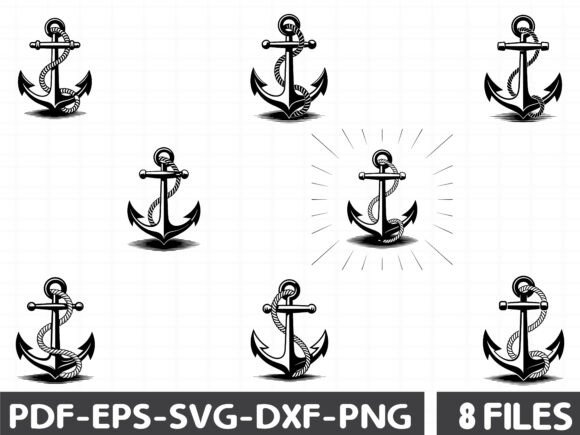
Anchor SVG, Ship Anchor SVG
As a designer who’s digitized and stitched hundreds of nautical motifs—from coastal boutique apparel to baby nursery patches—I opened Anchor SVG, Ship Anchor SVG expecting simplicity. What I found wasn’t just a silhouette; it was a quiet, confident statement—clean lines, balanced weight, and that subtle nautical gravitas that reads as timeless, not trendy. It’s the kind of design that feels equally at home on a linen tea towel in a seaside kitchen or stitched onto a navy sweatshirt for a small shop’s summer collection.
A Real Moment: Embroidering a Custom Tote for a Local Bookstore
Last week, I used Anchor SVG, Ship Anchor SVG as the centerpiece for a limited-run embroidered tote bag—part of a “Coastal Reads” collaboration with an indie bookstore. The client wanted something sturdy but poetic: no cliché seagulls or cartoon waves. Just presence. Just anchor. We placed it centered on the front panel of heavyweight cotton canvas, sized to 3.2 inches tall. After hooping with medium-weight cutaway stabilizer and testing on scrap fabric first, the stitch-out held its shape beautifully—even across the slight texture of the canvas weave. Customers didn’t just notice it; they paused. Touched it. Asked about the meaning. That’s the quiet power of this design: it invites attention without shouting.
Where It Shines—and Where It Asks for Care
Anchor SVG, Ship Anchor SVG performs exceptionally well across common embroidery projects—but only when matched thoughtfully to material and intent.
- Custom apparel: Works cleanly on sweatshirts and structured tees—especially when paired with a satin stitch outline for definition. Avoid placing it directly over thick seams or shoulder yokes unless you’ve tested hoop clearance first.
- Tote bags & aprons: Ideal. Its bold negative space and strong contour hold up even on loosely woven fabrics, provided you use appropriate stabilizer (cutaway for heavy canvas, tear-away for lighter cotton).
- Baby embroidery & nursery decor: Gentle, gender-neutral, and scalable. At 2 inches or smaller, it still reads clearly—no fussy details to vanish in fill stitch. Perfect for onesies, burp cloths, or framed pillow covers.
- Embroidered patches: A natural fit. The clean perimeter and minimal internal breaks make it easy to digitize for border + fill, and it presses flat without distortion.
- Holiday or wedding gifts: Surprisingly versatile. Paired with a simple monogram or date in a complementary font, it adds quiet significance—think “Est. 2024” beneath the anchor on a linen kitchen towel for a housewarming gift.
That said, Anchor SVG, Ship Anchor SVG isn’t magic. It needs thoughtful handling on stretchy knits (pre-stabilize thoroughly), dark fabrics (test thread contrast—navy thread on black can disappear), and curved surfaces like caps (reduce size to 2.5" max and verify hoop rotation). Tiny corners—like the inner curve of the anchor’s stock—can trap dense fill if your digitizing software doesn’t manage stitch direction intelligently. Always inspect those areas in your embroidery software preview before stitching.
Design Integrity Meets Commercial Reality
This isn’t just a decorative element—it’s a brand signal. When customers see Anchor SVG, Ship Anchor SVG on a handmade product, they register craftsmanship, intention, and cohesion. It elevates a plain tote into something collectible. It gives a baby onesie quiet sophistication instead of cutesy overload. For Etsy sellers and small shop owners, that perceived value translates directly to pricing confidence and repeat buyers.
But let’s be real: visual appeal alone won’t carry a commercial embroidery project. Stitch density matters. If the original file packs too many fill stitches into the fluke or shank, you’ll get puckering on lightweight fabrics—or worse, thread breakage mid-run. Always open the embroidery file in your editing software and check stitch count distribution. If it’s heavy, consider simplifying the fill or switching to a lighter underlay.
Practical Designer Notes You’ll Actually Use
Before stitching Anchor SVG, Ship Anchor SVG into your next finished product, here’s what I do—and recommend:
- Test on scrap fabric *with the exact same stabilizer and thread* you’ll use in production.
- Check how it reads in black-and-white mockups—this reveals contrast issues invisible on screen.
- Compare placement on light vs. dark fabric backgrounds. Does the shape hold? Does detail survive?
- Verify hoop size compatibility—especially if using multi-position hoops or cap frames.
- Inspect small interior angles and tight curves for potential stitch crowding.
- Confirm licensing terms from the 100 Unique Digital Quote Design Pack SVG, PNG, DXF, EPS, PDF Formats bundle—commercial use is implied, but always double-check scope (e.g., does it cover resale of physical embroidered items? Digital product bundles?).
- Use proper stabilizer—not just for hold, but for drape. A stiff stabilizer on a soft baby blanket defeats the purpose.
More Than a Graphic—It’s a Design Asset
Within the broader category of Illustrations and Graphics, Anchor SVG, Ship Anchor SVG stands out because it bridges digital flexibility and tactile authenticity. As a machine embroidery design, it’s adaptable: scale it for a patch, simplify it for applique, layer it with text for custom apparel, or use it solo as a minimalist embroidered accent. It doesn’t compete with your brand voice—it supports it.
For craft business owners and Etsy sellers, that reliability is gold. You’re not gambling on a fussy motif that fails on textured tea towels or stretches out on cotton lycra. You’re choosing a design that delivers clarity, consistency, and quiet resonance—every single time.
And that’s why, after ten years of reviewing embroidery files, I keep Anchor SVG, Ship Anchor SVG in my go-to folder—not as filler, but as foundation.